
Campbell County Release Records
A Campbell County release means that one agency’s physical custody ended. It does not always mean that the person walked free. The Campbell County Jail may release someone on bond or recognizance, after time served, at sentence expiration, after dismissal, or under another court order. It may instead transfer the person to the Tennessee Department of Correction, another jail, a federal custodian, or a detainer holder. The sheriff’s booking and release entry is the primary source for a local jail event because it can identify the next agency as well as the time Campbell County custody ended.
That distinction controls the search. A person released to the community may have a court order and no TDOC record. A state-sentenced person may disappear from a local list while remaining incarcerated. Parole means conditional release to community supervision before a sentence expires. Probation is court-ordered community supervision, sometimes after a short period of confinement. Discharge generally marks the end of a sentence or supervision obligation. Time served means the court credited enough jail time to satisfy the confinement ordered in that case.
- Community release
- The person leaves the releasing agency without an immediate handoff to another custodian.
- Transfer
- Custody continues under a receiving jail, prison, federal agency, or other authority.
- Detainer
- A request or authority that may keep the person in custody for pickup by another agency.
- Discharge
- The formal end of the sentence or supervision reflected in the issuing agency’s record.
Note: A missing jail entry is not proof that a Campbell County inmate returned to the community.
Campbell County Inmate Release Routes
The correct follow-up source depends on the stated disposition. Campbell County has not published an online jail database schema, so the entries below describe release types worth asking the sheriff to confirm. They are not a claim that every local record uses the same words. Ask for the actual disposition or release type, the date and time, the order or bond reference, and the receiving agency when a transfer occurred.
| Release route | What it can mean | Best next record |
|---|---|---|
| Bond or recognizance | Release under court-set terms while the case continues | Sheriff release entry and court bond order |
| Dismissal or court order | Legal authority directs the jail to end custody | Court disposition plus the jail’s actual release time |
| Time served or expiration | The ordered local confinement has been satisfied | Judgment, jail credit, and release entry |
| TDOC transfer | The person leaves Campbell County but remains in state custody | County transfer record followed by TDOC FOIL |
| Detainer pickup | Another authority assumes custody | Receiving-agency field and that agency’s locator or record |
A bond amount alone does not show that bond was posted. A court order also does not give the exact moment jail staff completed release processing. Campbell County released inmate verification is strongest when the legal event in the court file matches the operational event in the sheriff record.
Campbell County Release Record Fields
A useful Campbell County release record answers who was held, which authority held that person, when its custody ended, and what happened next. The county does not post a public field list. A focused request can still name the existing booking or release fields needed to resolve the event. Not every requested item will be retained or public, and the custodian may redact a protected part while producing the rest.
| Field to request | What it helps establish |
|---|---|
| Legal name, aliases, DOB, booking number | Matches the record to the correct person |
| Booking date and time | Ties the release to a specific Campbell County jail stay |
| Charges, court, bond, or order reference | Connects the jail event to its legal basis |
| Actual release date and time | Shows when Campbell County custody ended |
| Release disposition or type | Separates bond, time served, dismissal, expiration, or transfer |
| Receiving authority or destination | Shows whether custody continued elsewhere |
| Property receipt or booking photo | Documents property handling or the defined booking |
State records use different identifiers. TDOC relies on a TOMIS or TDOC number and may also show an SID. Federal Bureau of Prisons records use a register number. ICE uses an A-number and biographical details. Keep the issuing system beside each status and date. A county jail release date should not be relabeled as a TDOC discharge, and a projected date should never be stated as an actual release.
Request Campbell County Release Records
Begin with the Campbell County Sheriff’s Office. Tennessee citizens have inspection and copy rights under the Tennessee Public Records Act, subject to exemptions. An inspection request cannot be forced into writing merely because staff prefer it, though a copy request may require a form or written submission. Ask for an existing booking sheet, release screen or report, jail-log entry, transfer record, or property receipt. An agency need not answer a broad question or create a new release list that does not exist.
- Call 423-562-7446 to confirm the current records custodian, submission channel, and hours. Ask whether the person left Campbell County custody or transferred.
- Identify the person with full name, a date range, and DOB or booking number when needed to avoid a same-name error.
- Request the existing booking and release record, including actual release time, disposition, order or bond reference, and receiving agency.
- Ask for electronically available copies and an estimate before authorizing copy, labor, media, or archive costs. No Campbell jail fee schedule was located.
- If a part is withheld, request the nonexempt portion and the legal basis for each redaction or denial.
610 Main Street
P.O. Box 82
Jacksboro, TN 37757
423-562-7446
Call to confirm the records contact, submission method, and hours.
The Office of Open Records Counsel guidance says the custodian should act within seven business days by producing the record, denying it with a basis, or explaining that more time is needed and providing an expected date. Seven business days is not always the final production date. Large files, archive retrieval, and review for lawful redactions can take longer.
Note: Verify the sheriff’s current submission method before sending a date of birth or other sensitive identifying detail.
Campbell Release Counts Need Context
TDOC publishes one-day monthly county-jail snapshots, not Campbell County release totals. The January 2025 report showed 191 people against 322 beds. Its custody mix included 86 TDOC backup prisoners, 16 local felons, 3 other convicted prisoners, 19 pretrial felons, 2 pretrial misdemeanants, and 65 people in the report’s “other” category. These numbers describe one day. They do not establish annual releases, turnover, or average length of stay.
The TDOC jail reports page shows the source series and the county tables used for that snapshot. The image below displays the official reports hub rather than a release feed.
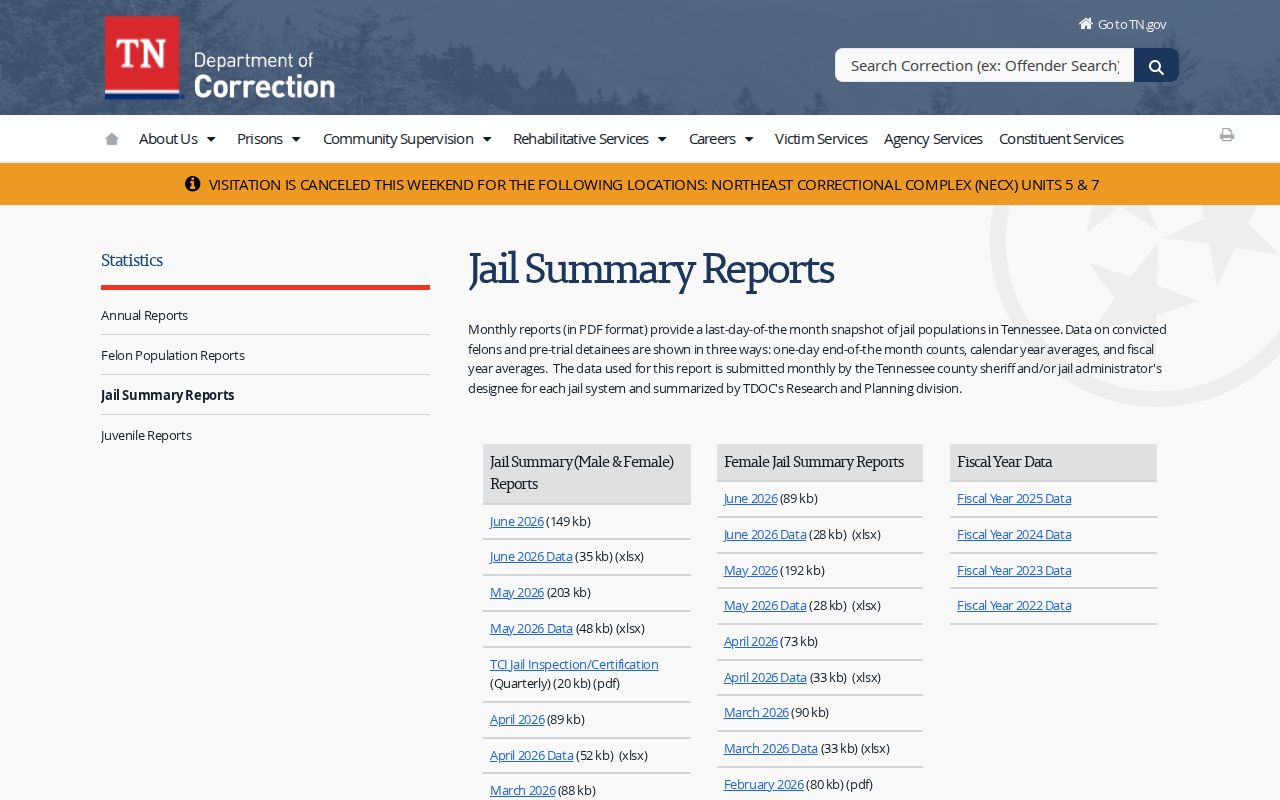
The report is valuable because its TDOC-backup count shows why a Campbell County roster disappearance can mean a state transfer. It must not be marketed as a list of released inmates.
Campbell Release Papers and ID
A former state prisoner has a concrete discharge record that a county jail detainee may not receive. Under TDOC Policy 511.03, the discharged person receives the original signed CR-1941 Letter of Discharge, and TDOC keeps a copy in the institutional file. The related CR-3626 notice includes the offender name, TDOC ID, conviction date and county, date of birth, offense, release type, release date, sentence-expiration date, and intended-residence city and state. Those records can resolve an error or confirm actual state discharge.
Identification may also need attention after release. The Campbell County Clerk documents local service for Tennessee driver-license and identification-card renewals and duplicates. That office is a replacement route, not the issuer of a Campbell County jail release record. Keep the discharge paper, certified court order, and ID documents separate. Each proves a different fact.
Note: A TDOC discharge letter confirms a state event; it does not replace the sheriff’s record of an earlier Campbell County transfer.
Campbell Release Access and Expungement
T.C.A. §10-7-503 broadly covers records made or received in official business, while §§10-7-504 and 10-7-506 address confidential material, inspection, copying, and charges. The Campbell County public-records policy is the local procedure source. Before relying on it, confirm the present custodian, proof-of-citizenship options, current address, fees, and any later revision. Inspection generally is not charged, but reasonable copy and labor costs may apply.
Retention is system-specific. Campbell County publishes no recent-release feed or online retention rule. FOIL includes current and former TDOC felony offenders. BOP generally covers federal inmates released after 1982, while ICE’s public recent-release window is much shorter. Sealed, juvenile, confidential, or expunged material may be withheld or removed. Under Tennessee’s expungement process, a qualifying order can reach the arresting agency, jail, TDOC, and TBI. A missing result may therefore reflect lawful removal rather than current custody.
Find Campbell County Released Inmates
Campbell County does not publish an official 24-hour or 72-hour release feed. The sheriff’s official page also provides no roster, archive, field list, update schedule, or retention period. The strongest search therefore starts with the last known custodian and follows the disposition. It should not start with a commercial directory or treat absence from a current list as proof.
- Call the sheriff and ask for the actual release or transfer event, date, time, and receiving agency.
- Obtain the existing Campbell County booking and release record when an oral answer is not enough.
- Search the Campbell court file for the order, bond, dismissal, judgment, sentence, probation, or later disposition.
- If Campbell County reports a TDOC transfer or state felony sentence, search FOIL by TOMIS number, SID, or carefully matched name.
- Use VINE as an alerting supplement, then use BOP, ICE, or the federal docket only when that custody type fits.
- Record the date checked and preserve the exact agency wording for projected, eligible, ordered, transferred, released, or discharged.
The official Campbell County sheriff page identifies Sheriff Wayne Barton and supplies the durable agency contact, but it provides no public release feed. The captured page confirms why a telephone and records-request fallback must lead the local search.
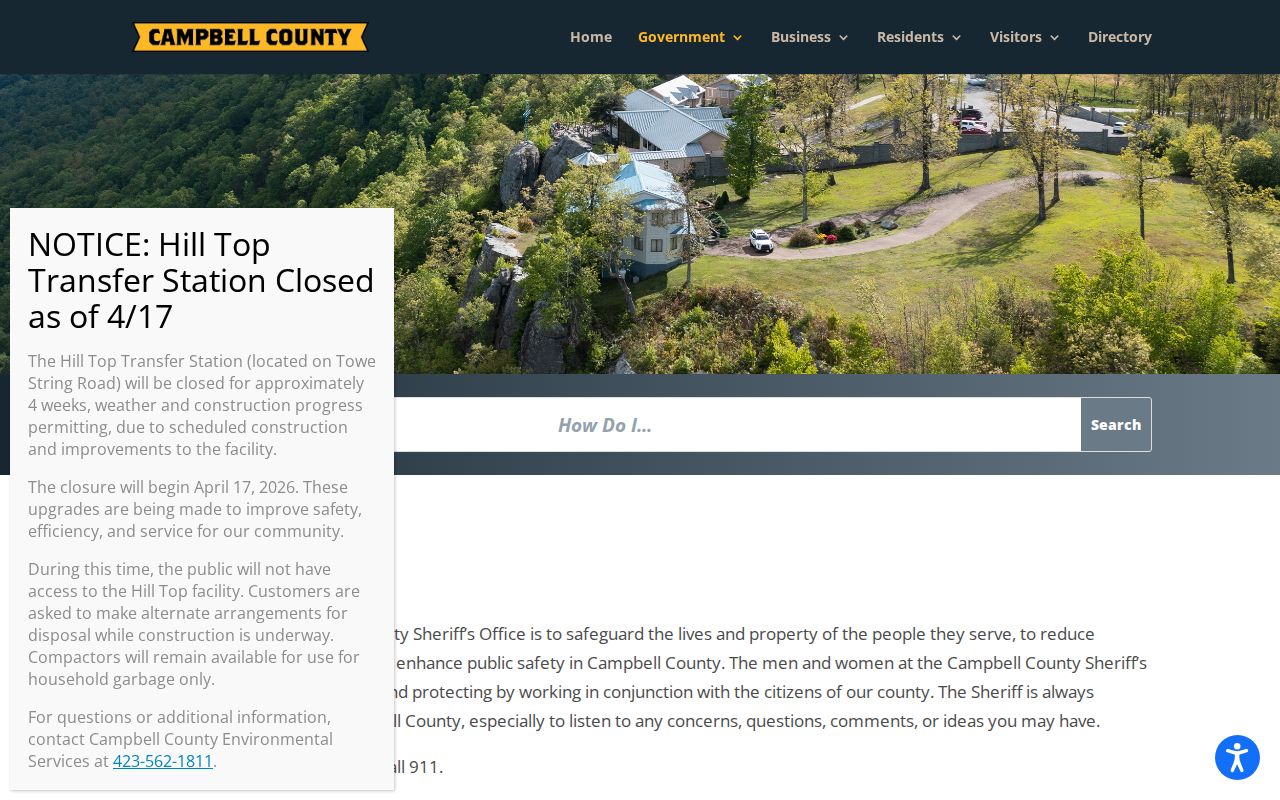
The sheriff record resolves whether Campbell County custody ended in the community or at another agency’s door.
Campbell Released Inmates in FOIL
TDOC’s Felony Offender Information Lookup covers Tennessee felony offenders currently or formerly in TDOC custody or supervision. It is not a complete Campbell County booking archive. A local misdemeanant or pretrial detainee may never appear. By contrast, someone transferred from the Campbell County Jail as a TDOC backup may appear as incarcerated, which means custody continued after the county entry ended.
| FOIL search or result field | How to use it |
|---|---|
| First and last name | Start a name search and compare all identifying details |
| Aliases and race | Narrow results when appropriate |
| TOMIS or TDOC ID | Best discriminator when the number is known |
| SID | Separate state identification search route |
| Status | Distinguish incarcerated, parole, probation, and inactive |
| Location, sentence, and release information | Read the live labels without turning an eligibility date into an actual release |
The direct TDOC FOIL search accepts name, TOMIS or TDOC ID, and SID routes, with a case-sensitive CAPTCHA. Its captured interface shows those inputs.
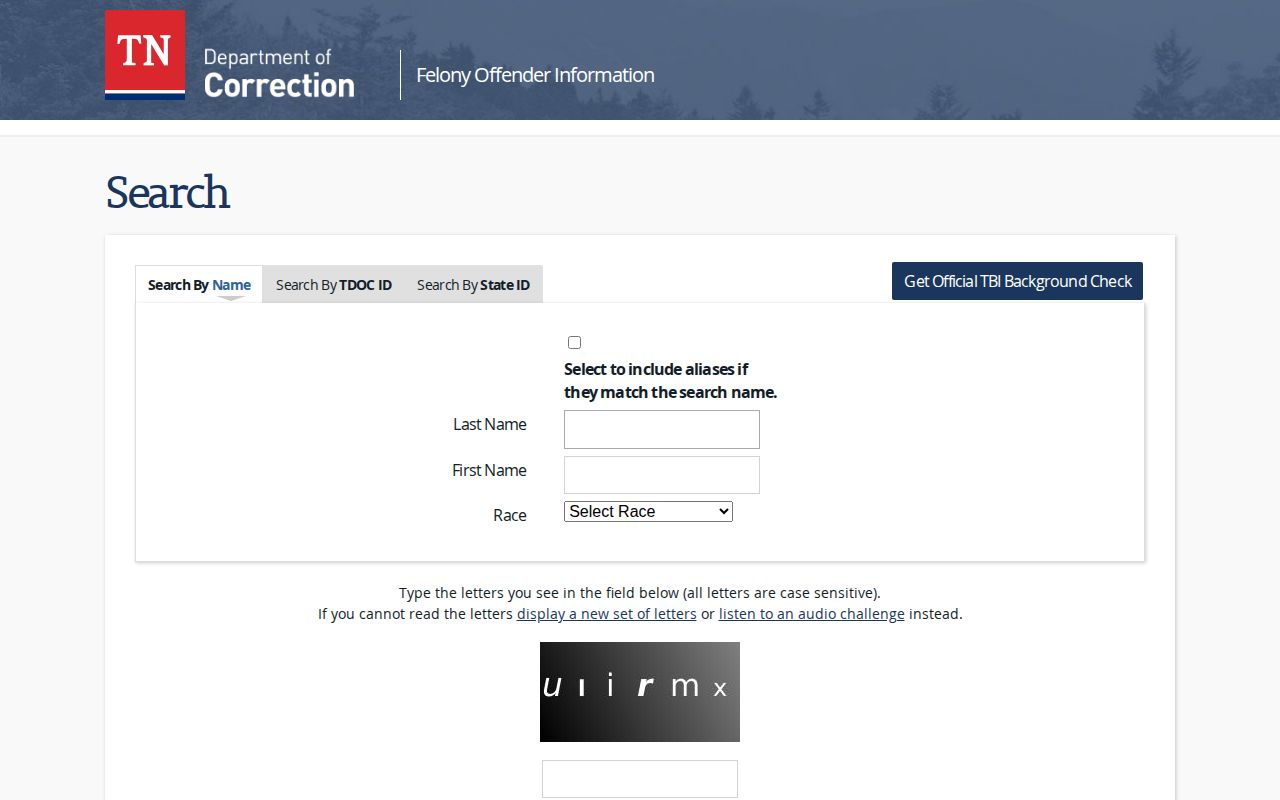
Open the correct person and read status before reading dates. Parole and probation are community-supervision categories, while inactive needs release detail or a discharge record for a firm date and reason.
Campbell Court Release Record Check
Campbell County’s online court search is a durable route after a jail entry disappears. It accepts Party Name or Case Reference, Case Year, and Case Number, with Circuit or General Sessions and Criminal or Civil filters. Search terms compound, and only the first ten name or reference terms are considered. Older case references may belong in the Party Name or Case Reference field.
The Campbell Online Court Records search can reveal a dismissal, judgment, sentence, bond order, probation order, revocation, or later disposition. Its captured form shows the county-specific filters.
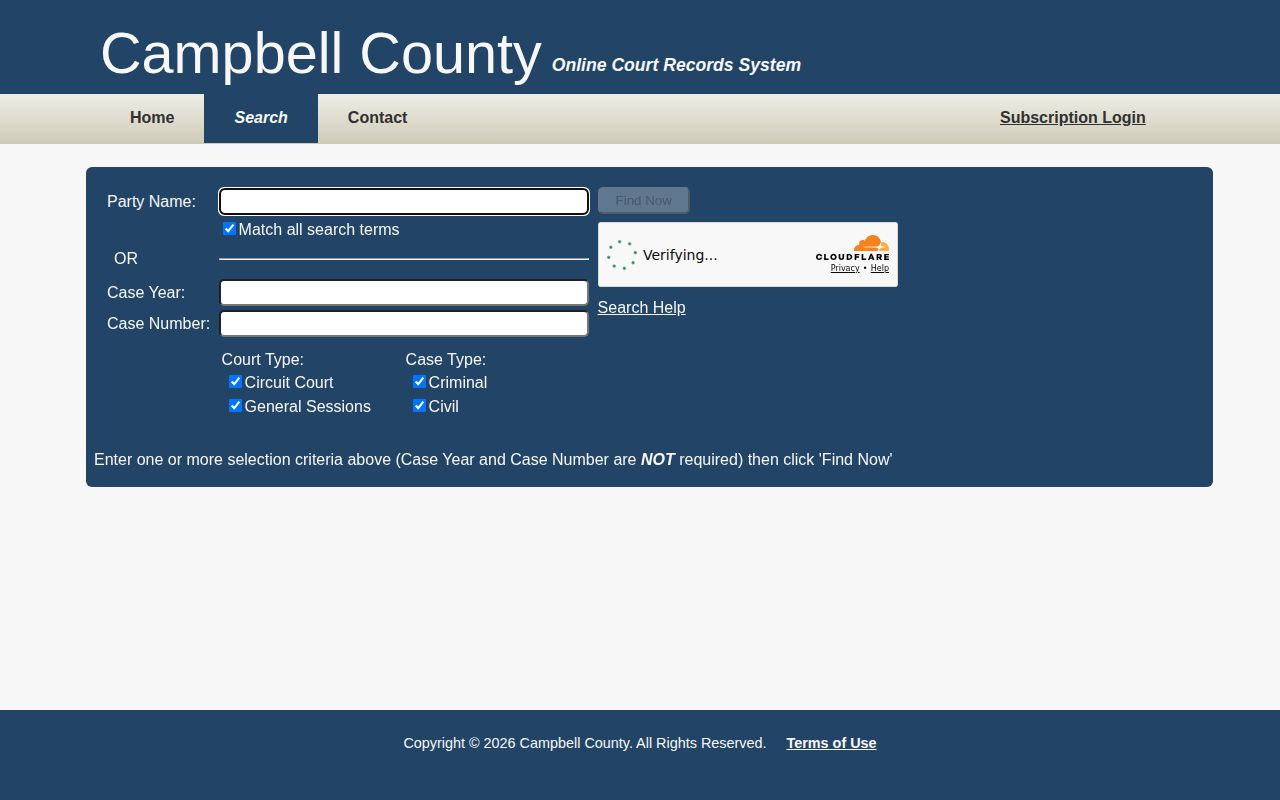
A court record explains the legal authority for release. It does not prove the minute when staff carried out the order. Match the court event to the Campbell County sheriff’s actual release timestamp.
Note: A scheduled hearing or a posted bond amount is not proof that Campbell County physical custody has ended.
Campbell Release to an ICE Detainer
A release can be a handoff. ICE describes a detainer as a request for advance notice and temporary continued custody, up to 48 hours, so immigration officers can assume custody. TDOC’s own release notice also recognizes release by detainer to another facility. No Campbell County ICE contract or local detainer program was established in the research. The point is conditional: when the sheriff record names ICE or another detainer holder, county release is not community release.
The ICE detainer explanation defines that handoff. For a plausible immigration case, the ICE Online Detainee Locator can search current detainees and people released from ICE custody within the last 60 days. After that period, absence from the locator proves nothing. Exact names matter, and an A-number search also requires country of birth.
Campbell Release or TDOC Transfer
Campbell County’s reported TDOC-backup population makes a roster disappearance unusually hard to read. In the January 2025 snapshot, 86 of the 191 reported people were TDOC backups. The proper sequence is the sheriff’s transfer record, the receiving agency, and then FOIL. If FOIL says incarcerated, the person changed custodians. That is not a community release.
If FOIL later shows parole or probation, the person is in a community-supervision category. If it shows inactive, inspect release information and seek the CR-1941 discharge letter when the exact state outcome matters. The Campbell County court judgment can explain the sentence, but it cannot replace TDOC’s sentence calculation or actual discharge record. The Campbell County parole and probation record route explains how the Jacksboro supervision office fits after release.
Campbell Releases Across Other Systems
VINE provides alerts, not a permanent release archive. Tennessee’s VINE service supports searches by name or offender ID and notifications by phone, email, TTY, and text for covered records. TDOC participation is confirmed, but Campbell County jail participation was not independently confirmed. A VINE notice should prompt a check with the agency record because a custody event can be a transfer. No result may stem from coverage, spelling, delay, or retention.
Federal custody requires a different tool. The BOP Inmate Locator generally covers federal inmates released after 1982 and shows name, register number, age, race, sex, release date, and location. A past date with “RELEASED” or no current facility means BOP custody ended, but another custody or supervision status may follow. The captured locator demonstrates the federal search and a released result.
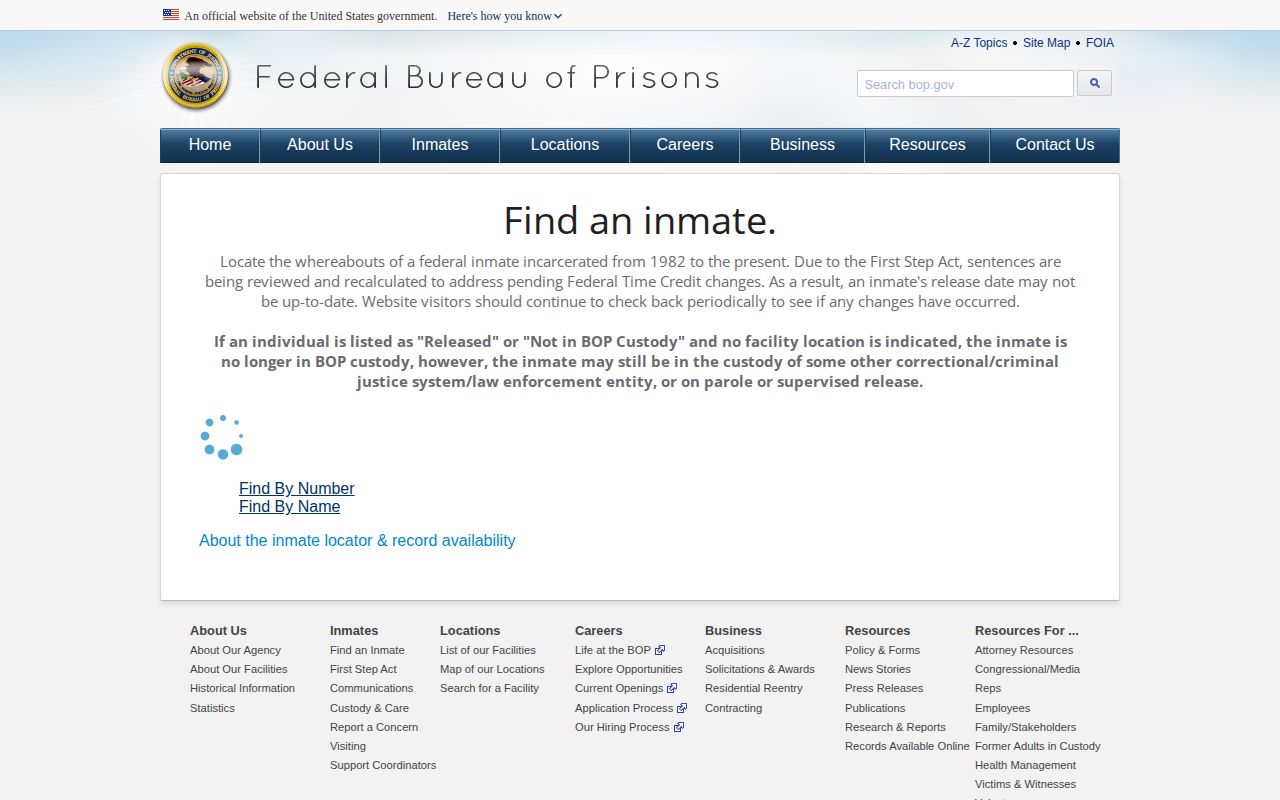
USMS-only custody may never produce a BOP record. In that case, use the federal docket, the custodian, and the appropriate U.S. Marshals district. A narrow offender registry may corroborate a covered person’s status, but it is not a general list of Campbell County released inmates.
Campbell County Release Facilities
Five custody systems may matter to a Campbell County release search, though only the sheriff’s detention operation was located in the county. Each facility page follows the record trail for that custodian. Start with the Campbell County Jail for a local arrest. Move to TDOC only after a state sentence or transfer, to BOP for a federal prison record, to ICE for a documented immigration matter, or to USMS and the federal court for federal pretrial custody.
- Campbell County Jail: confirm local release, bond, court order, time served, or transfer with the sheriff’s record.
- Tennessee Department of Correction: use FOIL and TDOC records for state prison, parole, probation, and discharge.
- Federal Bureau of Prisons: use the post-1982 locator and federal release records.
- ICE Detention Network: use ODLS only within its stated current and recent-release scope.
- U.S. Marshals Service Custody: use the federal docket and custodian when no BOP history exists.
When records conflict, keep the date and time each source was checked. Record the identifier used and the exact label shown. Ask the agency that controlled the disputed event for its existing source record rather than choosing the most convenient result.